𝐅𝐀𝐑𝐌𝐄𝐑𝐒 𝐈𝐍 𝐓𝐇𝐄 𝐂𝐎𝐍𝐓𝐀𝐈𝐍𝐌𝐄𝐍𝐓 𝐙𝐎𝐍𝐄 𝐔𝐑𝐆𝐄𝐃 𝐓𝐎 𝐑𝐄𝐌𝐀𝐈𝐍 𝐅𝐎𝐂𝐔𝐒𝐄𝐃 𝐀𝐒 𝐁𝐎𝐓𝐒𝐖𝐀𝐍𝐀 𝐈𝐍𝐓𝐄𝐍𝐒𝐈𝐅𝐈𝐄𝐒 𝐅𝐈𝐆𝐇𝐓 𝐀𝐆𝐀𝐈𝐍𝐒𝐓 𝐅𝐌𝐃
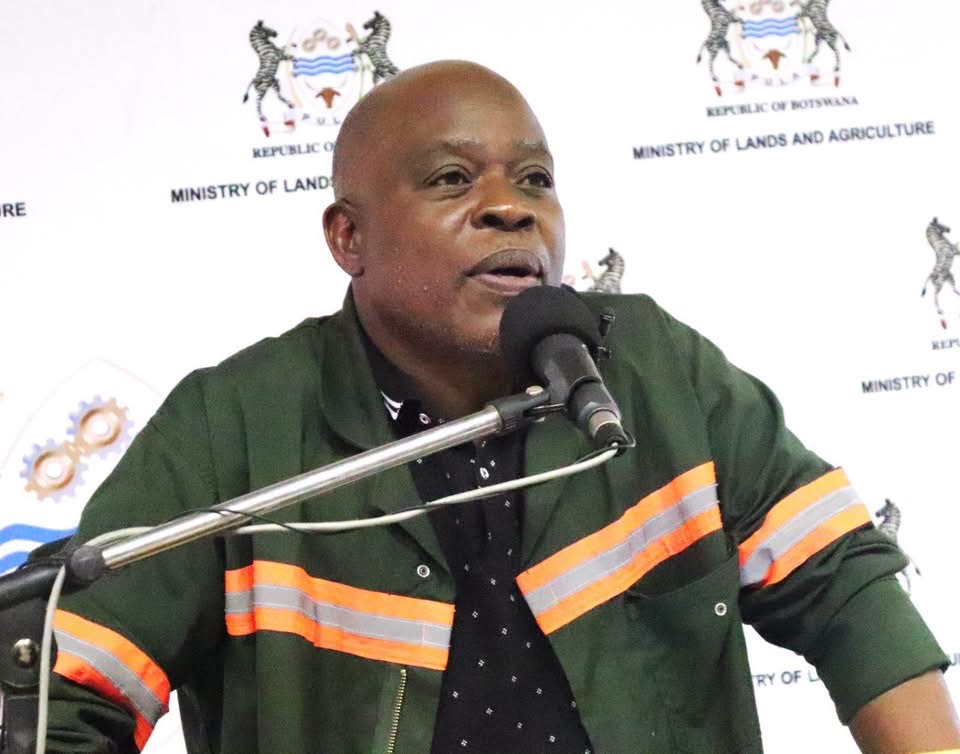
Speaking to farmers in the FMD containment zone, Director of Veterinary Services Dr Segale encouraged farmers not to lose hope despite the severe economic and operational challenges caused by the outbreak.
“Don’t lose focus as farmers, even though you are going through a very rough time. If we lose focus, we will never win the fight against FMD,” Dr Segale told farmers.
During his presentation, Dr Segale outlined Botswana’s strategy for managing the outbreak in Zone 11. He said emergency vaccination had been introduced along the South African border within the containment zone following the detection of FMD cases.
He explained that, after cases were reported in Zone 11, the authorities adopted a containment-fence strategy aimed at controlling livestock movement and preventing the disease from spreading beyond the affected area.
The containment fence stretches from Gamalete to the Sekhutlane-Tshwaanyaneng junction and continues towards Werda. According to Dr Segale, the strategy is intended to restrict livestock movement and strengthen efforts to contain the outbreak.Dr Segale said Botswana’s livestock population is larger than its human population, meaning the country produces more meat that can be consumed domestically.As a result, he stressed that maintaining access to external markets is critical to the sustainability of Botswana’s livestock industry.
He explained that Botswana could not simply adopt the same approach as some neighbouring countries that have chosen to live with FMD. Countries with much larger populations, he said, may be able to absorb a greater proportion of their locally produced meat, allowing farmers and the livestock industry to continue generating income despite the presence of the disease.
Botswana, however, depends significantly on access to external markets, making effective FMD control an important component of protecting the livelihoods of livestock farmers and sustaining the broader industry.Botswana is currently managing FMD within the country while continuing to address the persistent risk of new infections entering through its borders.
He explained that the country has adopted a “vaccination-to-live” strategy rather than pursuing immediate eradication of the disease.He pointed to the North East District as an example of the progress that can be achieved through vaccination, surveillance and cooperation between farmers and veterinary authorities.
Dr Segale further informed farmers that the FMD virus identified in Kgatleng District is SAT 1, a serotype that has also recently been detected in KwaZulu-Natal, South Africa.He warned that the presence of SAT 1 in South Africa increases the risk of FMD transmission across the region, making border surveillance, vaccination and movement controls important components of Botswana’s response.
Farmers in the containment zone used the engagement to raise concerns about the severe economic impact of the outbreak on their livelihoods.
Dr Bin, a farmer in the containment zone, applauded the Department of Veterinary Services for what he described as a technocratic approach to managing the outbreak.However, he highlighted the financial difficulties facing farmers, noting that he had gone seven months without an income because livestock is his primary source of financial stability.Other farmers raised concerns about their ability to pay workers, purchase feed and other livestock supplies, and meet household expenses.
Despite the challenges facing farmers, Dr Segale maintained that the progress recorded so far indicates that the disease has been brought under control in affected areas.He urged farmers to remain vigilant and continue working closely with veterinary authorities.
He called on farmers to report suspected cases promptly, comply with livestock movement restrictions and cooperate with veterinary officials during vaccination, surveillance and other disease-control operations.
#MoLA
#UnitedAgainstFMD
#StopTheSpread
Related Articles
𝐃𝐢𝐫𝐞𝐜𝐭𝐨𝐫 𝐨𝐟 𝐕𝐞𝐭𝐞𝐫𝐢𝐧𝐚𝐫𝐲 𝐒𝐞𝐫𝐯𝐢𝐜𝐞𝐬 𝐔𝐫𝐠𝐞𝐬 𝐅𝐚𝐫𝐦𝐞𝐫𝐬 𝐭𝐨 𝐂𝐨𝐦𝐩𝐥𝐲 𝐰𝐢𝐭𝐡 𝐭𝐡𝐞 …
<p><span style="background-color:rgb(255,255,255);color:rgb(34,34,34);font-family:Arial, Helvetica, sans-serif;">The Director of Veterinary Services Dr Kobedi Segale has urged farmers in …
Read More
Deployments Of Members Of Parliament
<p>Honorable Dr. E. G. Dikoloti Appointed Minister Of Lands And Agriculture</p>
Read More